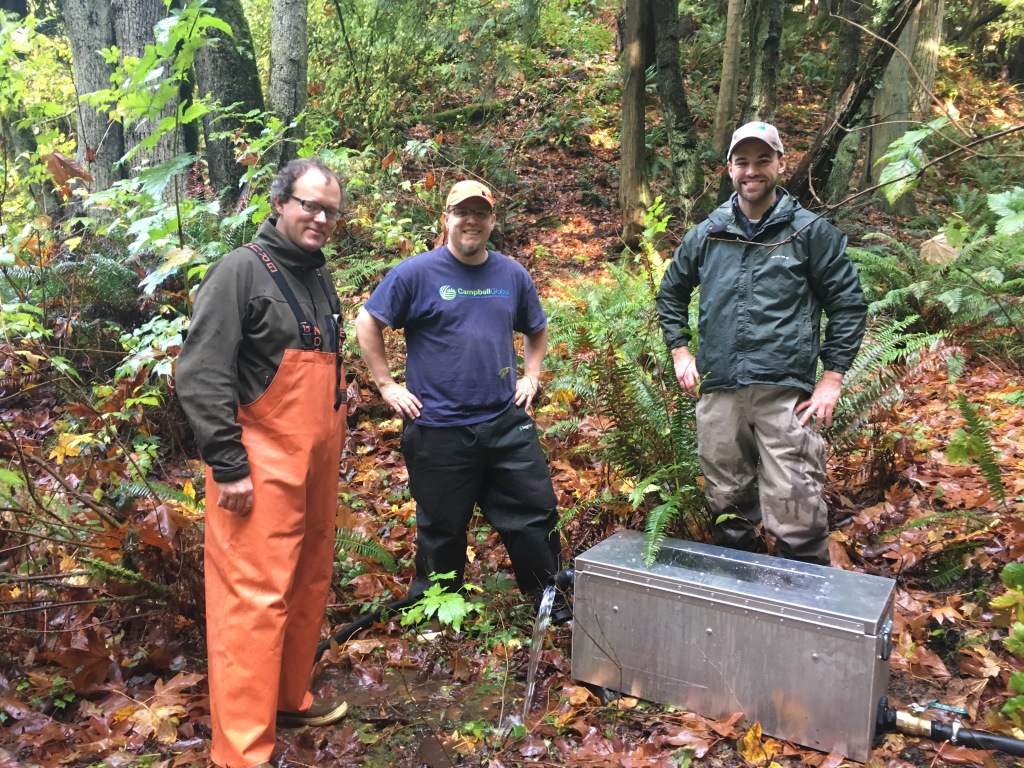
Remote Stream Incubators (RSI) are a core kokanee supplementation strategy in which these systems are installed on tributaries of Lake Sammamish. The RSI's allow kokanee salmon to be reared and imprint on specific streams which we would like them to recolonize. RSI's will provide a higher survival rate than in nature and may reduce hatchery and handling effects. This project is intended to be an opportunity for Citizen Science.
The program utilizes kokanee eggs generated from the emergency supplementation program. Kokanee eggs are fertilized at the hatchery and then taken to the RSIs, where they are installed into the egg box. The eggs are reared to hatch and are allowed to freely exit the RSI when ready, being released into the stream where they can begin their adventure to adulthood. We have three RSI systems in the Lake Sammamish Basin and are looking to expand!
All of the kokanee eggs placed in RSI's are thermally marked. This is a process that artificially changes the growth rings formed on the fishes otolith bone and when recovered from kokanee returning post spawn, allowing biologist to evaluate the success of the program by determining whether the fish is from the supplementation program and which strategy it was deployed. We now have definitive evidence that eggs raised in RSI’s have hatched, migrated to the lake, survived to adulthood, and returned to their natal waters to spawn.
RSI Components
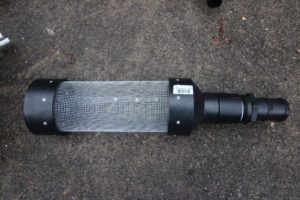
- Water Intake - Stream water is diverted from the stream into the water system for the RSI. The intake is protected with a "Trash rack" and is screened to prevent fish from entering the system.
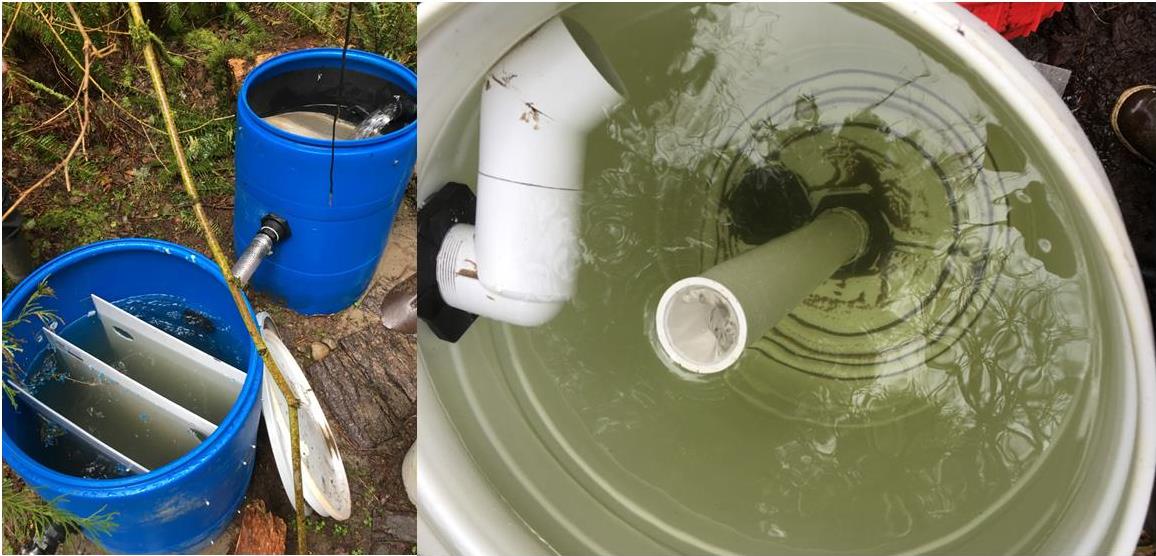
- Filtration System - We have devised a series of filtration barrels to remove sediment from the incoming water to protect the eggs. The first barrel removes larger sediment (>2mm) with a screen. The second is baffled, removing the smaller sediment (>0.5mm) by forcing the water to navigate through the barrel. Lastly, a spin or rotary filter is used to capture the finest remaining sediment from the water supply.
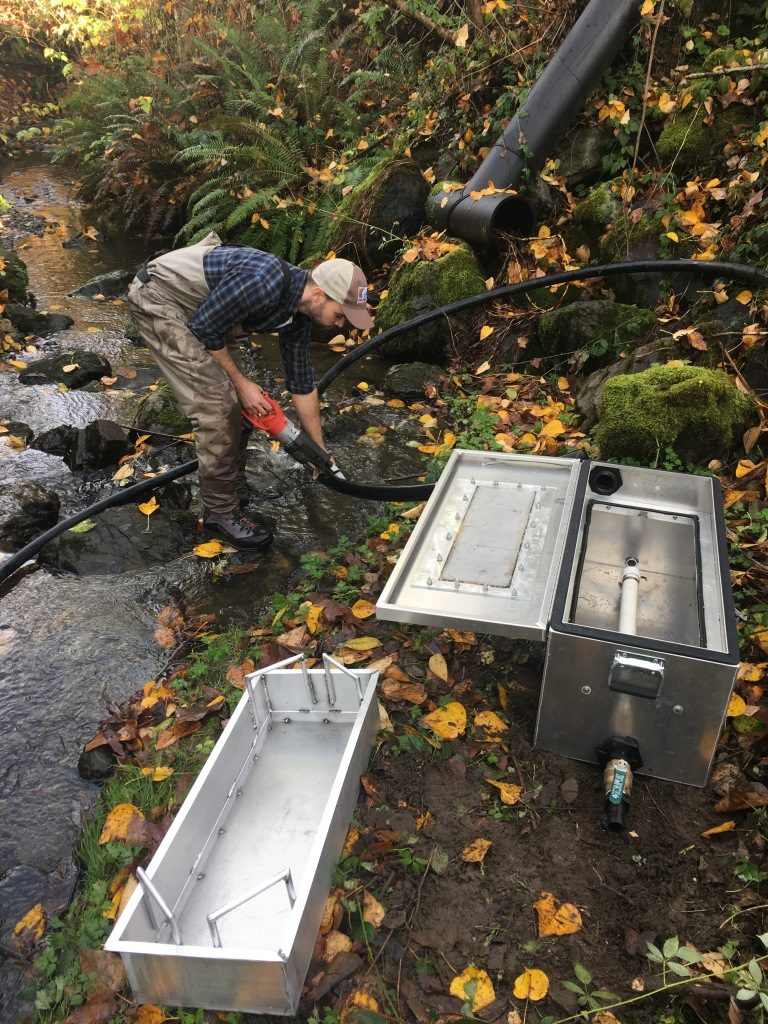
- Egg Box - An aluminum box was modified to allow the incoming water to enter through a pipe in the bottom portion of the egg box. The water works its way up through a removable media box, filled with native gravels and kokanee eggs, and then exits back out to the stream through a drain near the top of the box. The box lid was also modified to allow the kokanee to experience diurnal patterns (Day/night cycles) by cutting a large hole and covering it with Plexiglas.
Program Expansion - 2025
- More Egg Boxes - Salmon, including kokanee, do not all return in one pulse. In order to properly mimic the natural returns, we should have multiple egg boxes per stream. This would allow multiple collections through the spawning season.
- More Locations - Once this system is proven reliable, RSIs could be deployed throughout the watershed. This would diversify the recolonization of streams by kokanee and dramatically increase the kokanee population in Lake Sammamish.
Program Needs
- Citizen Science - We need volunteers! There is still minor maintenance is required to keep these systems optimally functioning.
- RSI Sponsors - We need sponsors to help fund building more RSIs. If you are interested or have questions, please contact us!
- RSI Location Sponsors - Since most of the Lake Sammamish is urbanized, we need willing landowners to host an RSI on their property. We will develop a map of preferred RSI expansion sites.